Rogue Defense: Hybrid Tower TD
- 4.4
- Rating
- 1.00M
- Installs
- Free
- Price

 Analysis by App-foxy
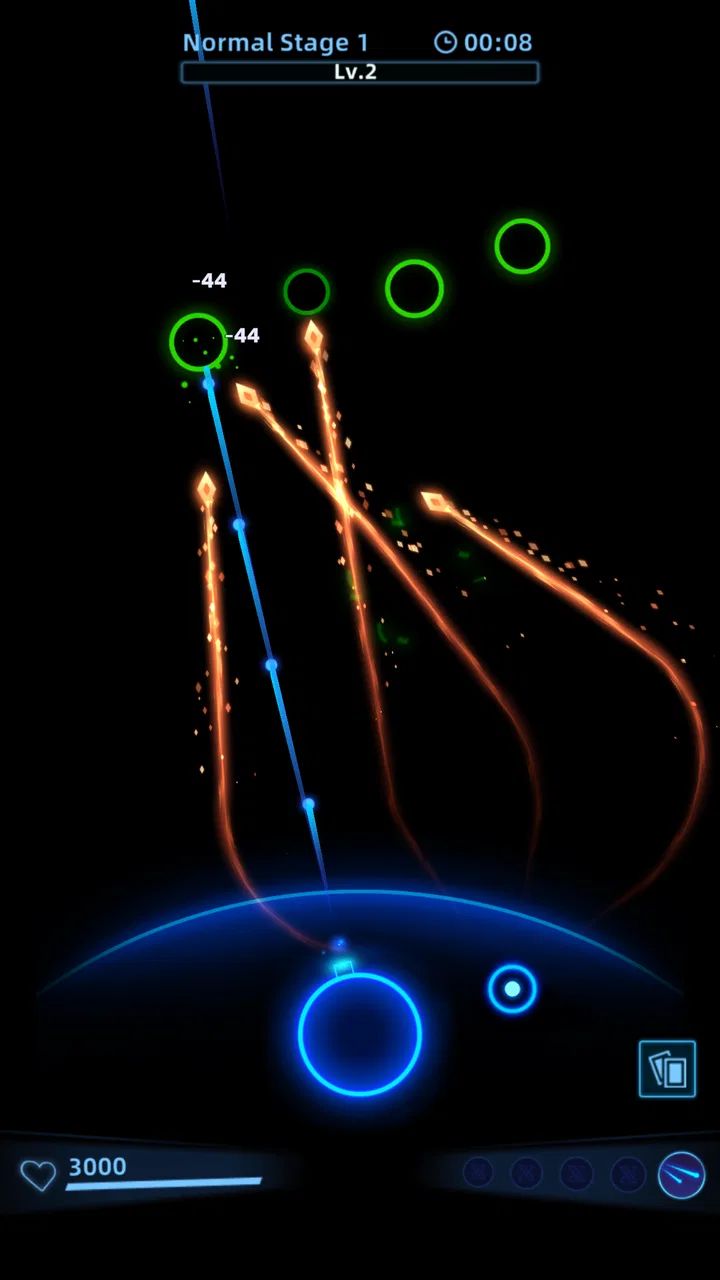
Rogue Defense: Hybrid Tower TD is the kind of strategy game I open when I want more involvement than simply placing a tower and watching a lane solve itself. Its central appeal is the tension between defending and attacking: I am not only reacting to enemies, but also deciding when to spend attention and resources on creating pressure of my own. That makes each session feel more like a series of decisions than a passive defense exercise.
Developed by CyberJoy Games, this free game sits in the strategy category and is suitable for everyone. It has reached over 500 thousand installs and holds a 4.3 average from around 6.7 thousand ratings, which suggests that its hybrid approach has found a solid audience. I think that description is useful, but it does not fully explain why the game can be engaging: the interesting part is how every defensive choice also affects what options remain later.
Where every defensive choice creates another problem
The usual tower defense routine is familiar. Enemies follow a route, I identify the most dangerous section, place a suitable tower, and improve it as the pressure increases. Rogue Defense: Hybrid Tower TD adds a more active layer by asking me to think about attacks as well as protection. That changes the rhythm. I am not merely building a wall; I am trying to shape the battle before the wall is tested.
You May Also Like

 Blood Strike: 2.5 Anniversary
Blood Strike’s Loadouts Turn Every Drop Into a Tactical Gamble
A close look at Blood Strike’s custom loadouts: how fast access to signature weapons reshapes its battle royale rhythm, rewards preparation, and narrows the gap between fights.

 Pandora - Music & Podcasts
Pandora’s Music Is Easy to Start, but Harder to Recover
Pandora’s strength is its low-effort path from a seed to a station. Its weak spot is how much confidence it asks you to place in connection, setup, and quiet recovery.

 8 Ball Pool
 Is Built on Rivalries, Rematches, and Routine
A close look at the rivalries, rematches, shared routines, and unanswered safety questions that turn a quick pool match into a persistent mobile community.

 Samsung Music
’s Quiet Strength Is Playing What You Already Own
Its reach comes less from spectacle than from dependable access to a personal library. That simplicity is both the app’s strongest retention engine and its ceiling.

 AccuWeather: Weather Radar
AccuWeather Review: A Quick, Clear Forecast for Everyday Decisions
For everyday plans, the best forecast is the one you can understand quickly. AccuWeather makes rain timing, radar, and local conditions easy to act on, with a few trade-offs.

 Hill Climb Racing
Why Hill Climb Racing Still Turns Crashes Into One More Run
A tiny car, a bumpy hill and one more upgrade: Hill Climb Racing keeps resurfacing because its simple chaos makes every near-miss feel personal.
More From Our News Desk



In practice, this means I have to resist the instinct to spend everything immediately. A strong early placement may make the opening comfortable, but it can also leave me without enough flexibility when the situation changes. I found that the best decisions were often modest ones: improving the part of the defense that solved the current weakness without committing so heavily that the next problem became impossible to answer.
This is where the game’s decision space becomes more interesting than its store summary suggests. The question is not simply “Which upgrade is strongest?” It is “Which improvement keeps my future choices open?” A defensive setup that looks efficient in the short term may be awkward if it leaves no room to respond to a different kind of threat. I enjoyed that pressure because it rewards planning rather than frantic tapping.
The attacking side adds another layer of timing. An attack can be valuable when it reduces future pressure, but using it at the wrong moment may distract from a vulnerable defensive position. I learned to treat offensive actions as part of my defense, not as a separate activity. If an attack buys breathing room, it may be better than another small defensive improvement. If my base is already close to failing, however, chasing offensive value can become an expensive mistake.
Planning for the next wave instead of the current one
My most useful habit was to stop judging a position only by whether it was surviving. Survival can be misleading. A setup may look safe while quietly consuming all the resources or attention needed for the next stage. I began checking what my arrangement would look like after the current pressure ended, and that simple pause improved my results more than rushing into another upgrade.
This longer view is especially important for players who normally prefer fast tower defense games. Here, the strongest move is not always the one that produces the largest immediate effect. Sometimes preserving a flexible position is more valuable than maximizing damage right away. That trade-off gives the game a thoughtful character, even when the individual actions remain easy to understand.
I also found that the game works well in short everyday sessions. If I have a few spare minutes while waiting for an appointment, I can focus on one defensive problem and make a clear plan. When I have more time, I can think about how offensive pressure and defensive preparation should support each other. It does not require me to treat every session like a long strategy marathon, but it still gives me something to consider after a failed attempt.
Risk is not the same as recklessness
The hybrid structure naturally creates risk-and-reward decisions. Attacking can make a difficult situation easier, but it also asks me to judge whether the immediate benefit is worth giving up another option. I liked that the game encourages calculated risk rather than rewarding constant aggression. A bold move feels satisfying when it is backed by a clear reason; it feels wasteful when I use it just because the option is available.
One practical lesson is to separate emergencies from opportunities. If my defense is about to collapse, I should prioritize the action that stabilizes the position. If the battlefield is under control, that is the time to consider whether an offensive move can improve the next phase. Mixing those two situations led me to make avoidable mistakes, because I was trying to gain an advantage while ignoring a weakness that was already visible.
Another useful trade-off is between specialization and resilience. A focused setup can be powerful against the problem I expect, but a more balanced arrangement may survive an unexpected change more reliably. I prefer resilience when I am still learning a stage, because it gives me room to observe and adapt. Once I understand the pressure better, specialization becomes more attractive. That is a meaningful progression in thinking, even when the game does not force me to follow one fixed solution.
Players should also know that the free-to-play structure affects how they may approach progression. The game is free to download, with in-app purchases ranging from $2.99 to $99.99 per item. I would recommend deciding early whether you want to play patiently without spending or whether optional purchases fit your habits. Strategy games become less enjoyable for me when I make purchases reactively after a frustrating loss, so I would treat spending as a personal limit rather than as a shortcut to solve every difficult moment.
That does not make the game unsuitable for careful players, but it does make self-control part of the experience. Anyone who dislikes in-app purchase systems should think twice before committing time to it. Someone comfortable with a free game that offers optional paid items may find the arrangement manageable, especially if they enjoy improving through planning rather than trying to remove every obstacle immediately.
Adapting instead of repeating the same build
The most important adaptation skill is learning to identify why a defense failed. Losing because the opening was too weak requires a different response from losing because the setup had no answer later. I found it more useful to change one part of my plan at a time instead of rebuilding everything after every failure. That made it easier to understand which decision had actually caused the problem.
This approach also prevents a common tower defense mistake: copying a successful arrangement without understanding its purpose. A layout that works in one situation may fail when the pressure arrives differently or when I spend resources at the wrong time. Rogue Defense: Hybrid Tower TD is more rewarding when I ask what each part of my plan is meant to accomplish. Is it buying time, dealing with a dangerous section, creating room for an attack, or preserving options? Once I could answer that, adaptation became much less random.
I recommend keeping a simple mental record after each attempt. I ask myself three questions: what threatened the defense first, which decision consumed too many resources, and whether I ignored an opportunity to attack. Those questions turn a loss into useful information. They also reduce the temptation to blame difficulty in general, because the next attempt begins with a specific adjustment.
There is a satisfying counterplay loop here. The game presents pressure, I respond with a defensive choice, and then I look for a way to alter the balance through offense. The opponent’s pressure is not merely something to endure; it becomes information about where my plan is weak. That makes adaptation feel active rather than cosmetic.
Why the game becomes more interesting over time
At first, the appeal is easy to understand: defend, attack, and try to keep the situation under control. Over time, the depth comes from improving the order of decisions. I began thinking less about isolated actions and more about sequences. A small improvement now might prepare an attack later. A restrained attack might preserve enough strength to handle a difficult phase. The game rewards players who can connect those steps.
This is also where I see a clear difference from simpler tower defense alternatives. Traditional games often emphasize memorizing effective placements or matching tower types to enemy types. Rogue Defense: Hybrid Tower TD asks for that kind of awareness, but its hybrid identity gives the player another timing problem to solve. The best plan is not only about where power is placed; it is also about when pressure should be redirected outward.
Compared with fast arcade-style defense games, this one is better suited to players who enjoy pausing mentally before acting. It may feel slower or less immediately satisfying if you want constant explosions and rapid upgrades. Compared with highly complex strategy games, however, it remains approachable because the core idea is easy to grasp. I would describe it as a middle ground: more deliberate than a basic lane defender, but less intimidating than a large-scale strategy simulator.
The current version is 5.9.2, and the game supports devices running Android 7.0 or later. That makes it accessible to people using older Android hardware, although the actual comfort of play will still depend on the device and the player’s tolerance for a smaller screen. I would check the device requirements before installing on an especially old phone, but the stated minimum makes the game a practical option for a broad Android audience.
Its everyone age rating also makes it easier to recommend in a family setting, at least from a content-rating perspective. I would still explain the in-app purchase model to younger players and avoid leaving purchase decisions entirely to them. The game’s strategic content is approachable, but the spending side deserves the same attention as the gameplay side.
Who will enjoy the hybrid approach
I think the best audience is someone who likes tower defense but wants more control over the flow of a battle. If you enjoy asking whether to strengthen a weak point, save for a larger response, or use an attack to change the next phase, the game offers plenty to think about. It is particularly suitable for players who like learning through repeated attempts rather than expecting the first plan to work perfectly.
It can also suit people who want a strategy game that fits around ordinary routines. I could imagine playing during a commute break, between household tasks, or while waiting for food, then returning later with a clearer idea of what I wanted to change. The important point is that short sessions still have a purpose: I can test one decision, observe the result, and stop without feeling that I abandoned a huge campaign.
I would be more cautious recommending it to players who want a completely passive experience. If you prefer placing a few defenses and watching them handle everything, the attack-and-defense balance may feel like extra work. It may also frustrate anyone who dislikes repeating a stage to understand its timing. The game’s satisfaction comes from improvement, so players looking for instant mastery should choose a simpler alternative.
It is also not my first recommendation for someone who strongly avoids optional purchases. Even though the game is free, the listed purchase range reaches from $2.99 to $99.99 per item. That does not automatically make the experience poor, but it means the monetization model should be part of the download decision. Players who want a one-time purchase with no recurring temptation may be happier elsewhere.
Small habits that make the strategy clearer
My first tip is to avoid spending simply because resources are available. Before committing, I try to identify the next likely pressure point and ask whether the purchase helps with that problem. This keeps the defense from becoming a collection of individually strong choices that do not work well together.
Second, I treat attacks as timing tools rather than emergency buttons. Using one only when the situation is desperate can mean I have already lost the chance to gain meaningful control. I prefer looking for a moment when an attack can reduce future pressure while my defense is still stable enough to benefit from the opening.
Third, I change one major decision after a failed run. Replacing the entire plan may produce a win, but it teaches me very little. A controlled adjustment reveals whether the problem was poor timing, an exposed defensive area, or an overly aggressive use of resources. This is the fastest way I found to turn repetition into progress.
Finally, I recommend separating experimentation from serious attempts. During an exploratory run, I deliberately test an unusual timing choice or a different balance between defense and offense. During a serious run, I return to the plan that has already shown promise. That distinction keeps experimentation useful without allowing every attempt to become chaotic.
My strategy verdict
After spending time with it, I see Rogue Defense: Hybrid Tower TD as a thoughtful choice for players who want tower defense with a stronger emphasis on planning horizons and counterplay. Its best moments come when I recognize that a defensive position is not permanent and that an attack can be part of the solution. The game turns each phase into a question about both survival and future control.
CyberJoy Games has built a strategy experience that is approachable at the surface but more demanding once I stop relying on immediate reactions. I appreciate that it rewards understanding rather than one-button efficiency. The main friction is that repeated learning may not suit everyone, and the free-to-play purchase structure requires sensible boundaries. Those are important considerations, not minor details.
My recommendation is simple: choose it if you want to think through your defenses, accept occasional setbacks, and use offense with purpose. Skip it if you want a purely relaxed tower defense game, dislike replaying failed attempts, or prefer a paid experience without optional item pricing. For the right player, its hybrid design gives familiar defense gameplay a useful strategic twist, and that is enough to make it worth trying for free.
FAQs for Rogue Defense: Hybrid Tower TD
01What is Rogue Defense: Hybrid Tower TD about?
Rogue Defense: Hybrid Tower TD is a strategic tower defense game that combines elements of roguelike gameplay. Players must strategically place towers and utilize unique skills to fend off waves of enemies. The game offers a dynamic experience with procedurally generated levels, ensuring that each playthrough is different and challenging.
02How does the roguelike element affect gameplay?
The roguelike element in Rogue Defense: Hybrid Tower TD means that levels are procedurally generated, providing a unique challenge every time you play. Each defeat is an opportunity to learn and improve strategies, as players can unlock new upgrades and abilities with each playthrough, enhancing replayability and depth.
03What platforms is Rogue Defense: Hybrid Tower TD available on?
Rogue Defense: Hybrid Tower TD is available on both Android and iOS devices. Users can download the game from the Google Play Store for Android or the Apple App Store for iOS. The game is optimized to run smoothly on a wide range of devices, ensuring a seamless gaming experience.
04Are there in-app purchases in Rogue Defense: Hybrid Tower TD?
Yes, Rogue Defense: Hybrid Tower TD includes in-app purchases that allow players to enhance their gaming experience. These purchases can include additional resources, unique towers, or cosmetic upgrades. While optional, they can provide an advantage in progressing through the game more efficiently.
05Is an internet connection required to play the game?
Rogue Defense: Hybrid Tower TD can be played offline, making it convenient for gaming on the go without needing an internet connection. However, certain features, such as leaderboards or multiplayer modes, may require an internet connection to access fully. This flexibility allows for both offline and online play.
Pros
- Innovative blend of RPG and tower defense.
- Stunning graphics with vibrant visuals.
- Engaging storyline with strategic depth.
- Regular updates with new content.
- Smooth controls and intuitive interface.
Cons
- Requires persistent internet connection.
- High battery consumption during play.
- In-app purchases can be costly.
- Occasional lag on older devices.
- Limited offline gameplay options.

Rogue Defense: Hybrid Tower TD
Gallery